
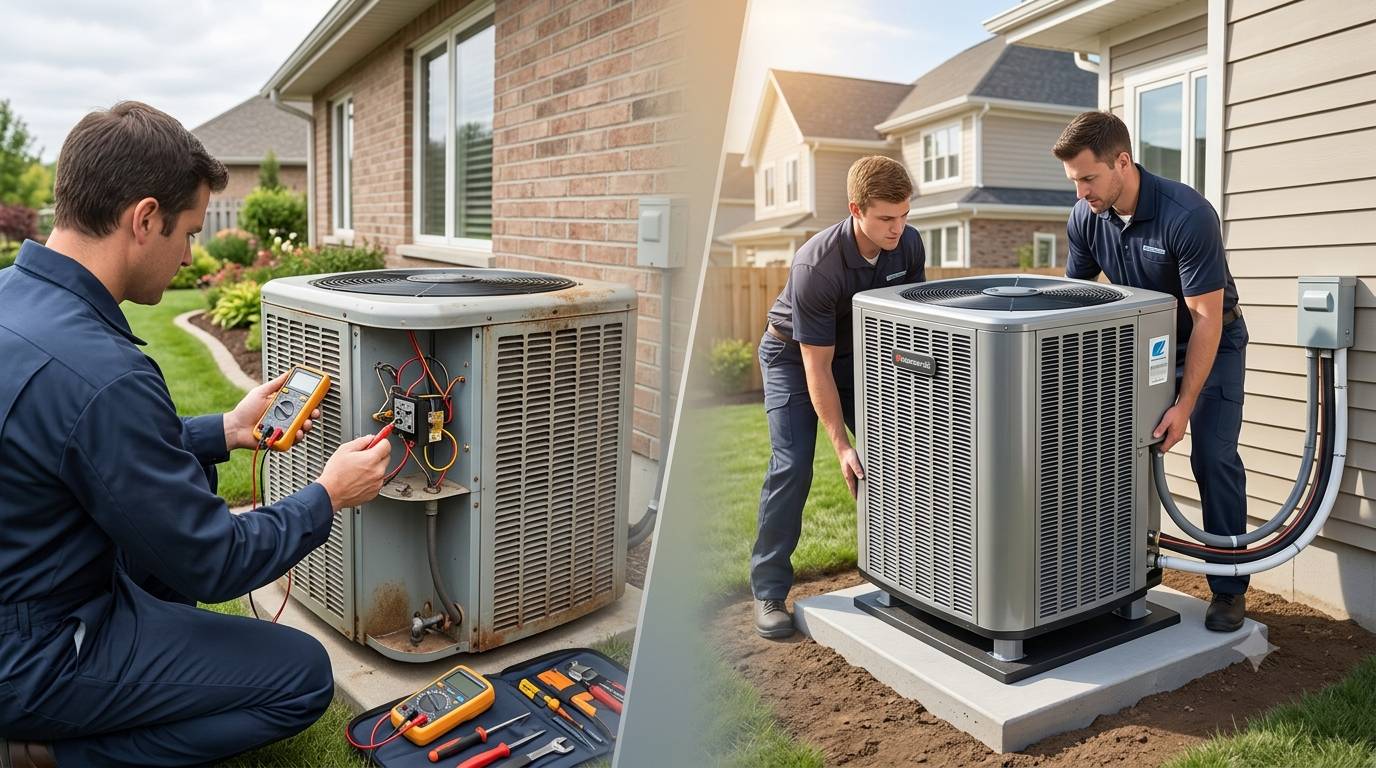
A struggling air conditioner can leave homeowners wondering whether a repair is enough or a complete replacement makes more sense. The right choice depends on several factors, including the unit’s age, repair history, energy efficiency, cooling performance, and the likely cost of keeping it running. These considerations are especially important when comparing AC installation and replacement options.
A minor component failure may be worth repairing if the system is otherwise reliable and in good condition. On the other hand, an aging unit with recurring problems can make repeated repairs costly over time. Understanding the advantages and limitations of each option makes it easier to choose a solution that supports reliable comfort and sensible long-term spending.
When AC Repair Makes Sense
Not every AC problem means the system has reached the end of its useful life. Some issues are straightforward to correct, particularly when they occur on a newer or well-maintained unit.
Problems such as a failed capacitor, faulty electrical component, clogged drain line, or worn fan component may be repairable without replacing the entire system. If the air conditioner still cools effectively and has not developed a pattern of repeated failures, repairing it may provide several more years of dependable service.
The cost and complexity of the repair are also important. A relatively inexpensive repair on a system that has otherwise performed well is generally easier to justify than replacing a functioning unit simply because it has reached a certain age.
When Replacement Becomes the Better Choice
There comes a point when repeated repairs no longer make financial or practical sense. An older air conditioner may require increasingly frequent service while still providing inconsistent cooling.
Replacement deserves serious consideration when you notice several warning signs at once. These can include:
- Frequent breakdowns or service calls
- Rising cooling costs without a corresponding increase in usage
- Uneven temperatures between rooms
- Persistent problems after previous repairs
- Excessive noise or unusual operation
- Difficulty finding compatible replacement components
- A system that is approaching or beyond its typical service life
Age alone should not determine the decision, but it is an important part of the bigger picture. A professional assessment can help determine whether a repair addresses an isolated problem or simply postpones a larger system failure.
Comparing AC Installation and Replacement Options
If replacement is appropriate, homeowners still have choices to make. A full system upgrade involves more than removing the old outdoor unit and installing a new one. The replacement should be properly matched to the home’s cooling requirements, existing ductwork, electrical setup, and other system components.
Working with a qualified professional can help you evaluate the available AC installation and replacement options and understand what each approach involves. The goal should not simply be to purchase the largest or most expensive system. An appropriately sized and correctly installed air conditioner is more important for reliable performance.
Homeowners should also consider the condition of the existing ductwork and other components. Replacing the outdoor equipment while overlooking airflow restrictions, leaks, or installation problems elsewhere in the system may prevent the new equipment from performing as expected.
Efficiency Matters, But So Does System Sizing
Energy efficiency is one of the major reasons homeowners consider replacing an older AC system. Modern equipment can offer improved efficiency compared with older technology, but efficiency ratings should not be viewed in isolation.
System sizing is equally important. An oversized air conditioner may cool a home quickly but can cycle on and off more frequently, while an undersized system may struggle to maintain comfortable temperatures during periods of extreme heat.
A professional load calculation can help determine the appropriate cooling capacity for a home. Factors such as square footage, insulation, windows, orientation, and local climate can influence the cooling requirements.
Repair or Replace? A Practical Decision Process
If you are uncertain about the right path, start by looking at the entire history of the system rather than focusing only on its latest problem.
Ask these questions:
- How old is the AC system?
An older system deserves closer scrutiny before you spend money on another major repair. - What exactly has failed?
A single worn component is very different from a compressor or another major system failure. - How often has the system needed repairs?
A pattern of recurring breakdowns can indicate that more problems are likely to follow. - How well does the system cool the home?
Persistent hot or cold spots may point to broader equipment or airflow issues. - What is the expected cost of continued repairs?
Consider both the immediate repair and the likelihood of additional expenses. - Would replacement improve comfort and efficiency?
A new system may make sense when the existing equipment has become inefficient or unreliable.
This approach keeps the decision focused on long-term value rather than the emotional reaction of dealing with an unexpected breakdown.
Common Mistakes Homeowners Should Avoid
One common mistake is choosing a replacement based solely on the lowest installation price. While budget matters, the quality of equipment, installation practices, system sizing, warranty terms, and ongoing service can have a significant effect on long-term performance.
Another mistake is assuming that every AC problem requires replacement. Replacing a relatively new system because of a repairable component can create an unnecessary expense.
Homeowners should also avoid delaying professional attention when cooling performance changes noticeably. Small problems can sometimes become more complicated when a system continues operating under abnormal conditions.
How to Prepare for an AC Replacement
If you decide that replacement is the right option, gather information before approving the work. Ask the contractor what caused the existing system’s problems, what replacement capacity is recommended, and whether the ductwork and electrical components are suitable for the new equipment.
It is also worth asking about installation details, maintenance requirements, warranty coverage, and expected operating considerations. A clear explanation should make it easier to compare proposals on more than just the final price.
Most importantly, choose a contractor who can explain the recommendation in straightforward terms. You should understand why a particular system is being proposed and what work will be performed during installation.
Making the Right Long-Term Choice
The decision between AC repair and replacement is rarely about age or price alone. A newer system with an isolated problem may be a strong candidate for repair, while an older unit with repeated breakdowns and declining performance may be better replaced.
Think about the total picture: reliability, comfort, repair frequency, efficiency, installation requirements, and expected future costs. Taking the time to evaluate those factors can help you avoid spending money on short-term fixes when a long-term solution is more appropriate.
Conclusion
Choosing between AC repair and a full replacement requires a careful look at the condition and history of your cooling system. Repairs can make sense for isolated problems, while repeated failures, declining performance, and an aging system may justify an upgrade.
The best decision is the one that balances immediate cost with long-term reliability and comfort. Rather than automatically repairing or replacing the equipment, have the system evaluated and compare your options based on its actual condition and your home’s cooling needs.